Code for America brought its biggest week to Chicago. Here's what it means.
Code for America Summit lands in Chicago for the first time — May 7–8 at Marriott Marquis. Buttigieg keynote, four tracks, and the Midwest civic-tech bench finally has its room.
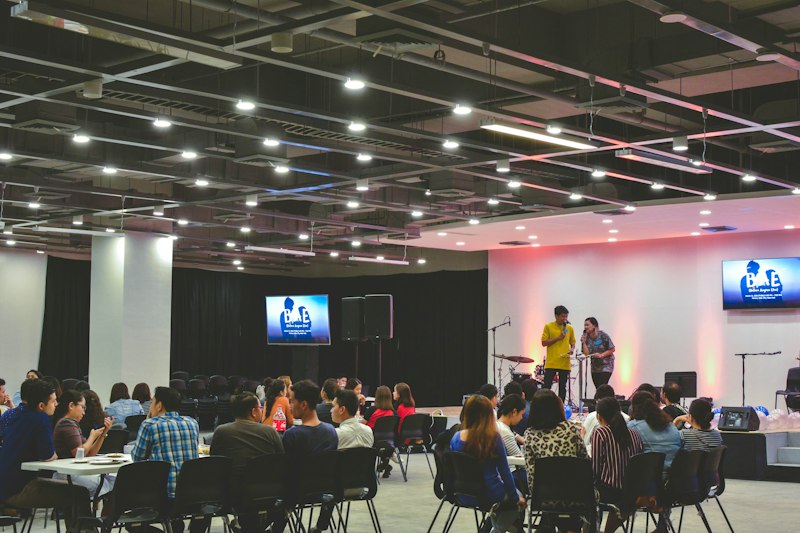
Code for America brought its biggest week to Chicago. Here's what it means.
If you build civic technology — at a city, a state agency, a federal team, a nonprofit, a vendor, anywhere on the public-interest tech map — your one week a year just moved to your backyard.
Code for America Summit 2026 runs Thursday May 7 and Friday May 8 at the Marriott Marquis Chicago, 2121 South Prairie Avenue, just south of Soldier Field. Two days. Four tracks. One mainstage. The theme is "The Future We Build," which sounds like a marketing line until you read CfA's framing — "our collective future is not something that happens to us. It's something we build through having bold ideas and through working to transform our vision into a reality" — and realize they mean it as a delivery thesis.
This is the first time CfA has put Summit in Chicago. After years anchored in Oakland and D.C., the flagship is in the Midwest. The Midwest is also, increasingly, where the operator class CfA exists to serve actually ships work. That's not a coincidence.
Marriott Marquis Chicago · 2121 S Prairie Ave, Chicago, IL 60616 · Open in Google Maps →
Why Chicago, and why now
CfA's Summit has historically lived where the funding lives — California for the early years, then D.C. once the federal civic-tech apparatus matured. The 2026 pivot is a quiet acknowledgment that a third pole has formed.
Chi Hack Night — the weekly Tuesday-night civic-tech meetup at the Merchandise Mart — has been running for over a decade and is one of the longest-lived civic-tech communities in the country. It's the talent feeder. mRelief — founded in Chicago by Rose Afriyie and Genevieve Nielsen — has helped nearly 470,000 people connect to SNAP and unlocked roughly $100M in benefits. It's the canonical civic-tech operator playbook. Civic Exchange Chicago, the cooperative of civic-startup founders that includes mRelief, DataMade, Block Club Chicago, and others, is the institutional layer.
And the Alliance of Civic Technologists (ACT) — the spiritual successor to CfA's sunset Brigade program — is run by Christopher Whitaker, a longtime Chi Hack Night organizer. Chi Hack Night joined ACT in December 2024. The infrastructure that used to live inside CfA HQ is now distributed across cities, with Chicago doing more than its share of the lifting.
The Summit landing here this year is CfA showing up in the room where the work is.
Day 1 keynote: Pete Buttigieg, and why "delivery" is the right frame
Day 1's mainstage is Pete Buttigieg — former U.S. Secretary of Transportation, two-term mayor of South Bend, Indiana — at the Marriott Marquis Chicago.
The civic-tech crowd's reaction to political headliners is usually a polite shrug. This one matters more than it looks. Buttigieg ran the federal department that processed and shipped tens of thousands of infrastructure projects under the Bipartisan Infrastructure Law — by volume, one of the largest delivery exercises the federal government has attempted in a generation. Whatever your politics, the operational story is real. He's also the rare politician fluent enough in software-team realities to talk about delivery without it being a metaphor.
If the Summit's theme is "the future we build," the Day 1 keynote is the tell. CfA is signaling the year of delivery — not the year of vision decks.
Day 2 keynote: Chan Hellman, and the unusual move of putting hope on the agenda
Day 2 is Chan M. Hellman, PhD — professor at the University of Oklahoma and director of the Hope Research Center. He's the author of 80-plus peer-reviewed studies on hope as a measurable, teachable construct.
This is the kind of mainstage choice that civic-tech audiences either dismiss or sit very still for. After three years of layoffs across federal civic-tech contracts, the rolling collapse of state-level digital service teams, and the slow attrition that comes from delivery work that takes a decade to land — the case for putting "hope as research" on the program is stronger than it sounds. It's also a very deliberate non-AI keynote in a year where every other tech conference has put an AI head on the bill.
Watch this slot. CfA programs the mainstage tightly; nothing on it is decorative.
The Forum One lightning talk: LLMs are eating .gov search
The most pointed specific session I'd circle if I were attending is Ensuring an Informed Citizenry in the LLM Era — Lightning Talk by Elisabeth Bradley, CEO of Forum One, Thursday May 7, 2:00–3:00 PM.
The premise: people increasingly start their search for civic information at an LLM — ChatGPT, Claude, Gemini, Copilot — instead of a .gov site, and the authority of government information is moving downstream of model outputs that government did not write, cannot inspect, and may not even know about. The talk previews how civic communicators are responding.
This is one of the most important questions in public-interest tech in 2026 and it does not get enough oxygen. Worth catching, even if you have to skip a competing breakout.
The four tracks
The 2026 Summit is structured around four official tracks — a tighter program shape than CfA's prior years. Read these as the questions the org is choosing to invest in:
1. Emerging Technology + Innovation. The AI track in everything but name. Watch for sessions on agentic government tooling, LLMs in public-benefit eligibility flows, and how state digital service teams are evaluating model outputs against compliance and equity bars. The Forum One talk lives here.
2. Service Design + Delivery. The CfA orthodoxy track — user research, content design, accessible flows, the discipline that produced GetCalFresh and GetCTC. Strongest signal-to-noise ratio if you build benefits-delivery software.
3. People Power + Community. The Brigade-shaped hole. With CfA's Brigade program sunset and ACT picking up the load, this track is where you'll find sessions on volunteer civic-tech, community-led product, and the operational realities of building public-interest tech without a budget. Chi Hack Night types should plan around this one.
4. Policy + Administration. The federal-state-local pipeline track. Expect content on procurement reform, 10x-style internal R&D funds, state digital service builds (think Code for America's State Software Collaborative work), and the policy levers that determine whether the software actually ships.
Full agenda is here — confirm sessions before you build your day. Lightning Talks are 5 minutes; Breakouts are 60 with 10–15 of Q&A; Mainstage is both days.
The Demo Lab
The Demo Lab is CfA's expo-floor format — except instead of vendor booths, it's working civic-tech projects shown by the people who built them. Procurement officers, state CIOs, and federal program leads circle this room hard at past Summits, because it's the closest thing to a structured intro between operators and the agencies that need to hire or fund them.
If you're a Chicago civic-tech founder — Civic Exchange members, take note — this is the room.
What it costs and how to attend
Standard tickets ran $749; Just-in-Time pricing was $699. Refunds closed April 10, so the room is locked at this point. There is a limited student discount — first-come, first-served — via summit@codeforamerica.org. If you have a Chicago intern or junior colleague who has never been to a CfA event, this is the year to send them.
The Marriott Marquis Chicago is on Prairie Avenue, steps from McCormick Place and Soldier Field. CTA Green/Red Line stops at Cermak-McCormick Place are the easiest civic-tech-budget commute. Drive only if you must — parking around McCormick is its own line item.
What to actually do with two days
Don't try to load the whole agenda. CfA Summit's hallway-to-session ratio is unusually high — most attendees come back saying the chance encounters with state digital service teams, federal program leads, and the operator class around the Demo Lab outweighed any specific breakout.
Pick three sessions a day. Block the keynotes. Spend the rest of the day in the Demo Lab, the lobby, and the coffee line. Bring a list of three questions you want answered by Friday afternoon.
The bigger thing this Summit is signaling
For most of the last fifteen years, civic-tech's center of gravity sat between Oakland and D.C., with everywhere else as the periphery. That's no longer the geography of the work. The state digital service teams that have actually shipped — Maine, Vermont, California's — are distributed. The benefits-delivery operators with the strongest user research practice — mRelief, Benefits Data Trust — are not on either coast. The volunteer infrastructure — Chi Hack Night, ACT — has always been distributed. CfA programming Summit in Chicago this year is the org catching up to that fact.
If you've been on the fence about whether civic-tech still has a center, this week is the answer. The center moved. It's at 2121 South Prairie Avenue.
Drive over. Or take the Green Line.
Related:


